Budget imported quartz can be a genuine bargain or a warped, color-shifted headache — sometimes from the same factory. What changed with tariffs, what quality variance really looks like, and how we vet what we install.
Ask three fabricators about Chinese quartz and you'll get three different rants. The truth is less dramatic and more useful: origin alone doesn't make a slab good or bad, but the budget end of the import market has real, recurring problems we've seen firsthand — and the pricing landscape shifted dramatically underneath all of it. Here's the whole picture.
The good
Price, selection, and — from the top-tier factories — genuinely respectable material. China industrialized quartz manufacturing at enormous scale, and the best plants run modern lines with consistent output. Many patterns that made marble-look quartz affordable to normal kitchens in the first place came out of that scale. A vetted import line with a real distributor behind it can be an honest value.
The bad: variance
- Resin ratios that drift between batches — more resin means a softer, more scorch- and scratch-prone top.
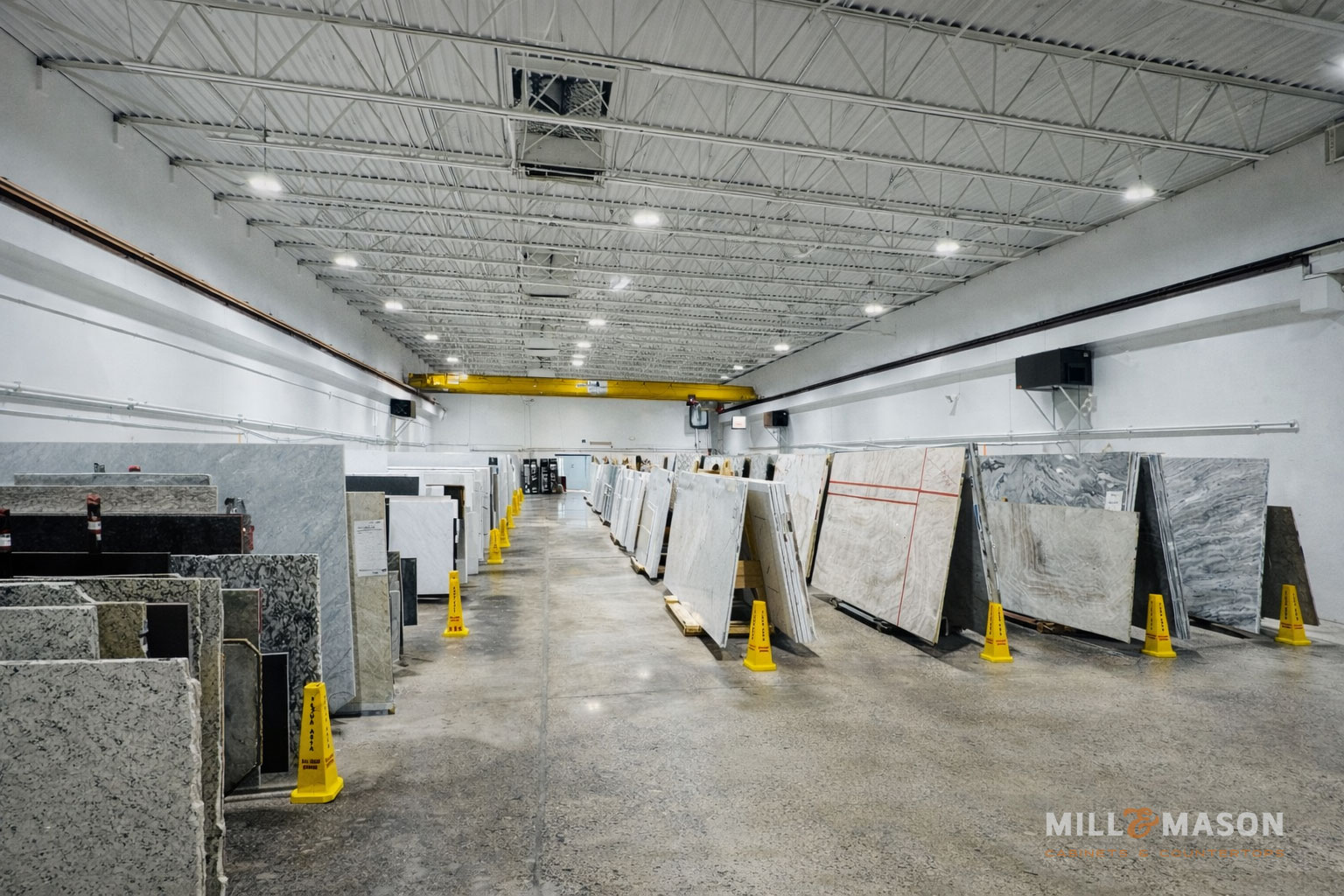
- Color and dye lots that don't match slab to slab. Fine for one island; a problem for a kitchen needing three matched slabs.
- Thickness inconsistency and warping — slabs that aren't flat cost fabrication time and show at seams.
- Warranty and support: when there's no U.S. entity behind the brand, a failed slab two years in is nobody's problem but yours.
The ugly: the tariff story
In 2019 the U.S. imposed anti-dumping and countervailing duties on Chinese quartz surfaces — combined rates that in many cases exceed 300%. That effectively ended direct Chinese quartz imports at the budget price point. What happened next is the part buyers should know: a lot of production shifted (or re-routed) to India, Vietnam, Malaysia, and elsewhere — sometimes genuinely new factories, sometimes the same supply chains with a new port of origin. “Not Chinese” on an invoice no longer tells you much about quality by itself.
The practical takeaway: judge the line, not the flag. A budget slab is a budget slab wherever it shipped from, and a well-run factory is a well-run factory.
The bottom line
There are beautiful, well-made imported slabs and there are cheap ones wearing a convincing pattern. The difference shows up two years after install, which is exactly when the receipt from the deal of the century stops mattering. If a price looks too good, the money came out of somewhere — usually the resin, the QC, or the warranty. We're happy to tell you which, slab by slab.