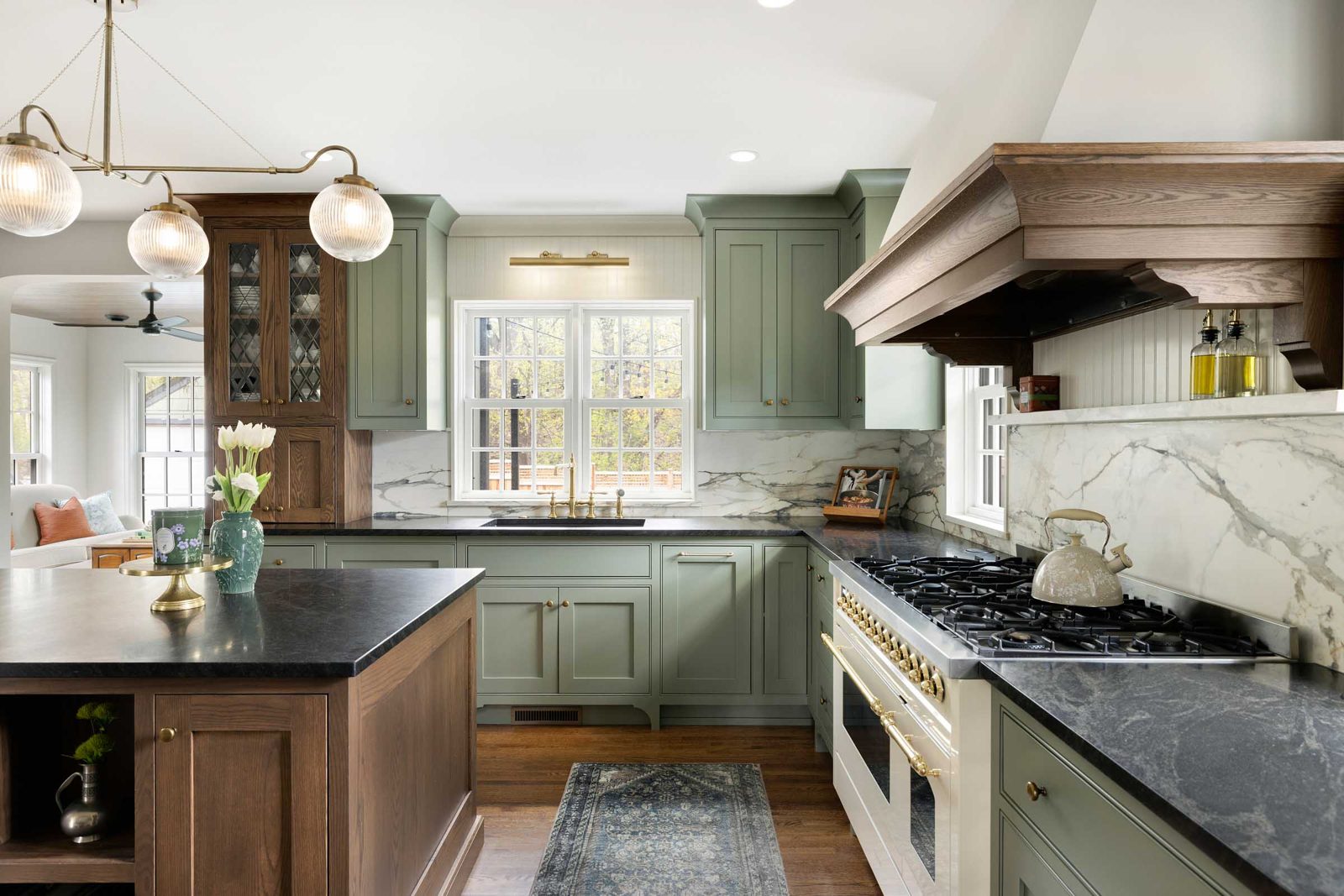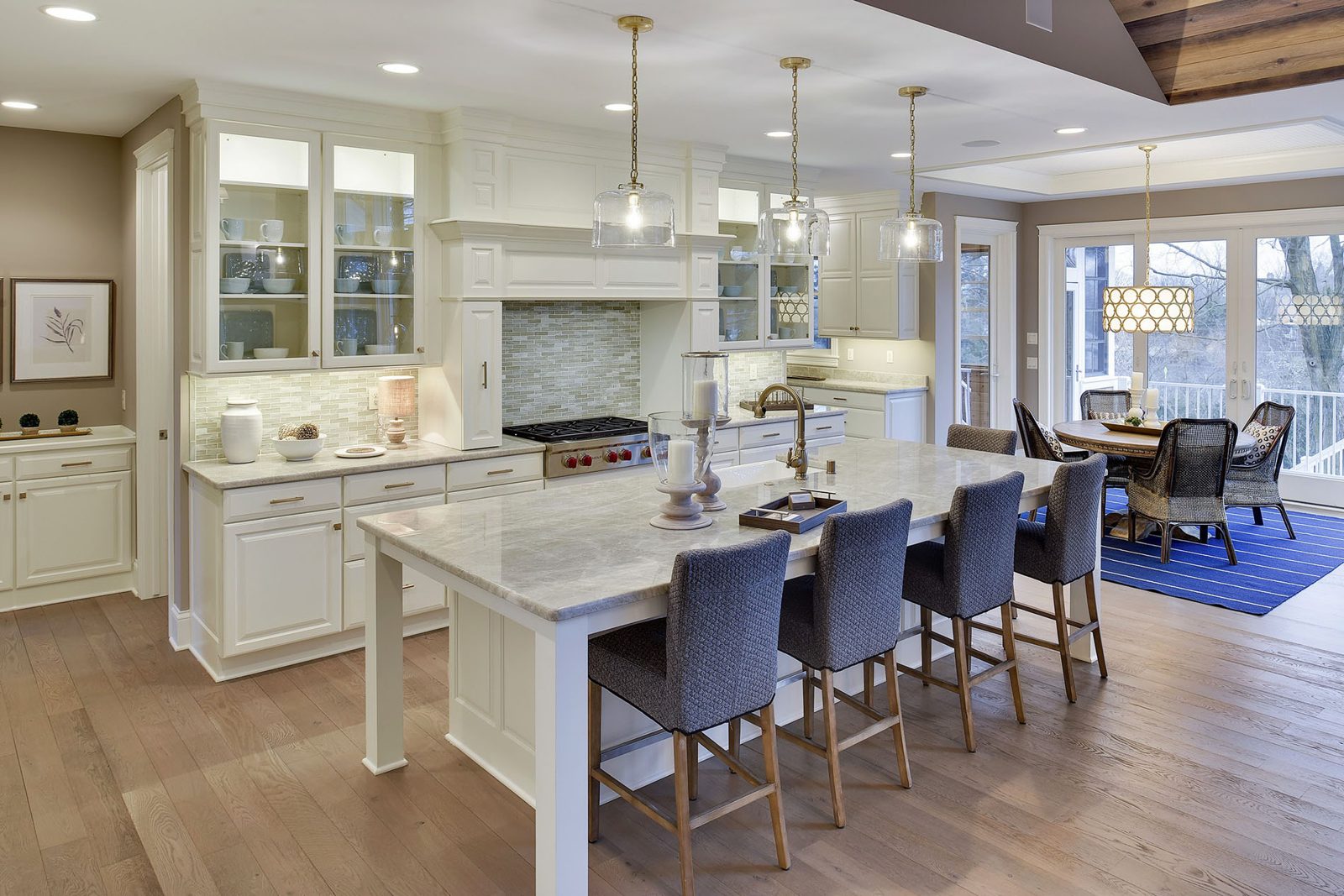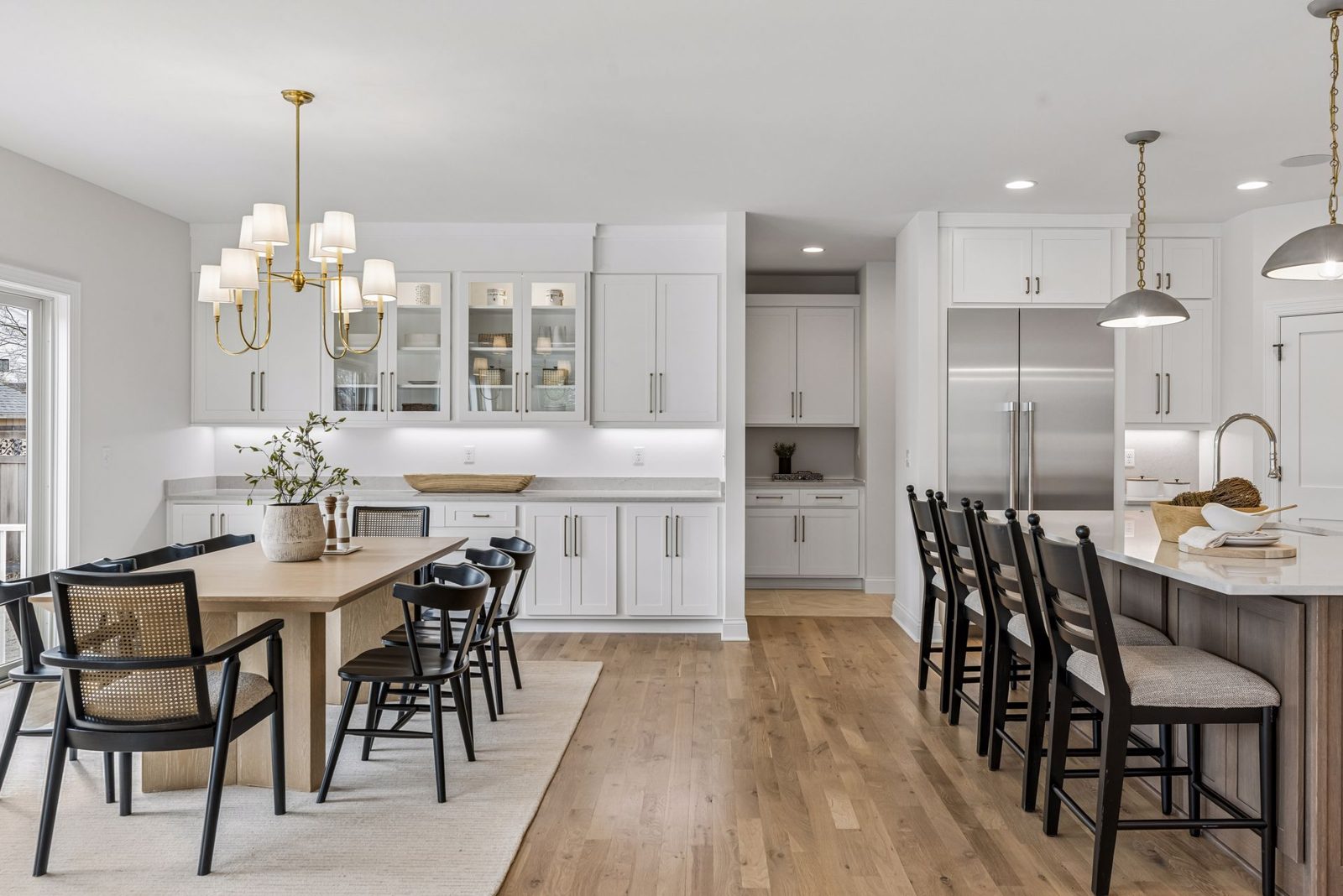
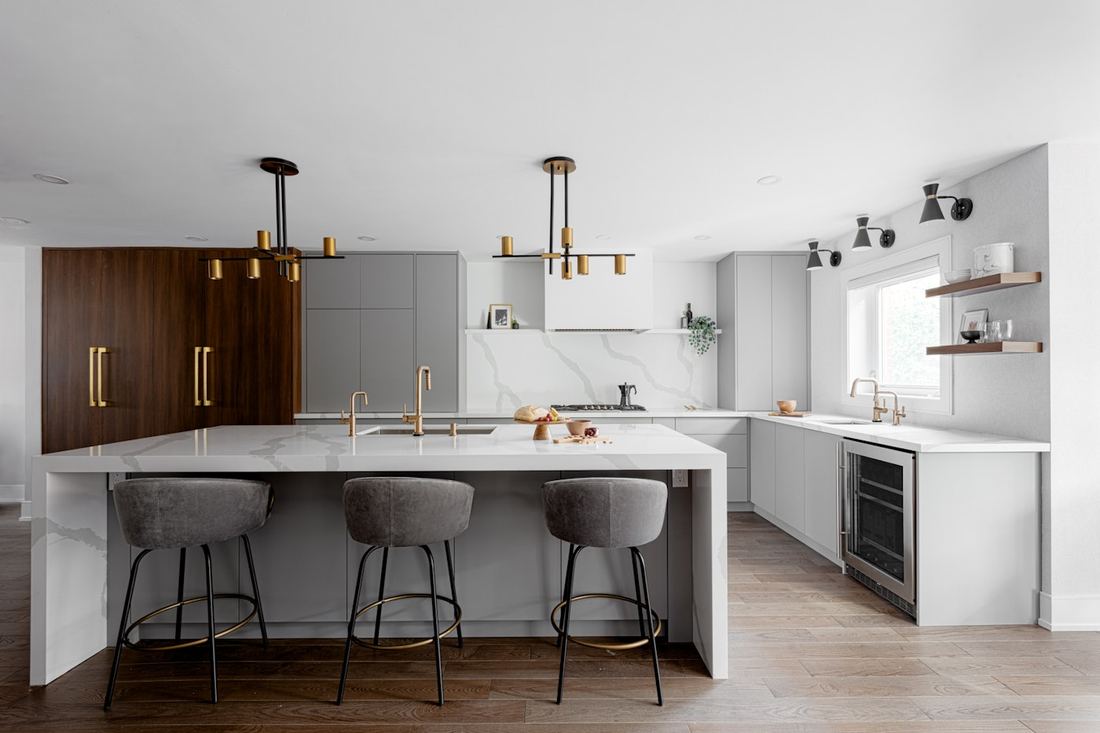
One is a 200-million-year-old stone that etches if you look at it with a lemon. The other is a factory-perfect surface that never needs sealing. Here's how to actually choose.
We fabricate both every week, so we don't have a horse in this race. Marble and quartz are both beautiful, both premium, and both wrong for somebody. The right answer depends on how you live — so here's the comparison we walk through in the showroom, with nothing sugar-coated.
The case for marble
Marble is real, singular, and irreplaceable. No two slabs on earth match, the depth of natural veining is something printed patterns still can't fully fake, and it ages into a soft, lived-in patina that many designers consider the whole point. It also runs naturally cool — bakers genuinely prefer rolling dough on marble.
The honesty part: marble is calcite, and calcite reacts with acid. Lemon juice, wine, vinegar, tomato — a splash left on the surface eats a dull spot (an “etch”) into the polish in minutes. It's softer than granite or quartz, so it scratches. It's porous, so it needs sealing, and even sealed it can stain. If a perfectly uniform surface forever is your expectation, marble will break your heart.
The case for quartz
Engineered quartz is non-porous — it never needs sealing, shrugs off wine and coffee, and doesn't etch. It's harder than marble, color-consistent from sample to slab, and the modern marble-look patterns (Calacatta and Carrara styles especially) have gotten genuinely good. For a hard-working family kitchen it is the lowest-maintenance premium surface you can buy.
Its honest weaknesses: direct heat can scar the resin (use trivets — see our quartz-and-heat guide), it can't live outdoors, and up close a printed vein doesn't have the translucent depth of the real thing. A refinish-and-repolish rescue that's possible on natural stone is much more limited on quartz.
The quick scorecard
- Daily durability & zero maintenance: quartz, clearly.
- One-of-a-kind natural beauty and depth: marble, clearly.
- Stain and etch resistance: quartz — marble etches, full stop.
- Heat tolerance: marble takes a hot pan better; quartz needs a trivet.
- Cost: they overlap. A classic Carrara can cost less than a premium quartz; a rare Calacatta costs more than almost anything engineered.
- Baths, fireplaces & low-acid zones: marble's risks mostly disappear — this is where it shines.
How we'd decide
Busy kitchen, kids, red wine, entertaining: pick a marble-look quartz and never think about your counters again. Primary bath, powder room, fireplace surround, or a kitchen owned by someone who loves patina and wipes spills as they happen: real marble is glorious, and those spaces barely test its weaknesses.
The best move is to stand in front of both. We keep real marble and the best marble-look quartz side by side in the showroom precisely for this conversation.